
 shivuvirat3@gmail.com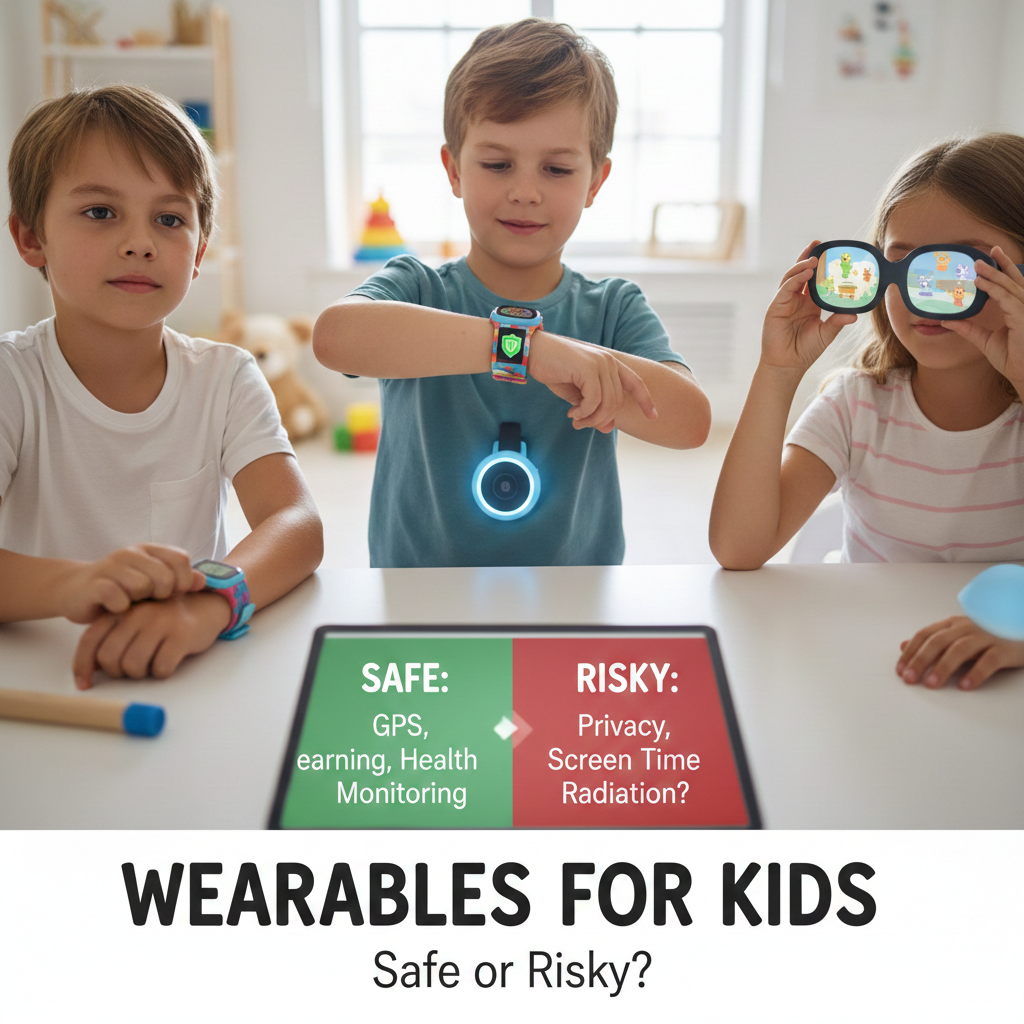
Technology is becoming an inseparable part of childhood, and smart wearables are now one of the biggest trends among kids. Whether it’s fitness bands, smartwatches, GPS trackers, or kid-friendly AR/VR gadgets—millions of parents are embracing these tools to keep children fit, entertained, and safe. But with rapid adoption comes a big question: Are wearables for kids safe or risky?
Let’s explore the benefits, risks, and how parents can make informed decisions.
Benefits of Wearables for Children
Wearable technology isn’t just a fun gadget; it can genuinely support a child’s lifestyle, growth, and safety. Some major advantages include:
1. Improved Health & Physical Activity
Fitness trackers for kids monitor steps, sleep patterns, and activity levels.
They encourage more outdoor play and help build habits around health and movement.
2. Safety & Real-Time Location Tracking
GPS-enabled smartwatches allow parents to track a child’s location in real time, offering peace of mind.
Some also feature SOS emergency calling or geofencing alerts.
3. Better Communication with Parents
Smartwatches with calling and messaging features are a safer alternative to giving young children smartphones.
Parents can stay connected without exposing kids to social media or the internet.
4. Fun & Learning
Educational wearables and AR-based gadgets improve engagement in learning.
Gamified progress tracking motivates kids to complete tasks and develop discipline.
Risks Associated with Wearables for Kids
Despite their benefits, some concerns cannot be ignored.
1. Privacy & Data Security Issues
Wearables collect sensitive information including GPS data, activity stats, biometrics, and sometimes voice recordings.
If not well-protected, this data can be vulnerable to misuse.
2. Screen Time Addiction
While wearables are not full-fledged smartphones, their game features and visual alerts may distract kids and increase screen dependency.
3. Over-Monitoring & Lack of Independence
Constant tracking can create unhealthy boundaries between parents and children.
Kids may feel like they’re always being watched, affecting their sense of autonomy.
4. Exposure to Radiation
Even though smartwatches emit relatively low electromagnetic radiation, prolonged and continuous exposure has raised concerns among health experts.
How Parents Can Make Wearables Safer
Using wearables responsibly is key. Here are some safety guidelines:
✔ Choose reputed brands with strong privacy and data encryption policies
✔ Disable unnecessary access permissions and location sharing
✔ Avoid wearables with internet browsing or gaming for young kids
✔ Set clear usage rules (screen time limits, communication boundaries, etc.)
✔ Teach children not to share personal information online
✔ Regularly update firmware and security settings
Tip: For very young children, choose wearables without Wi-Fi/Bluetooth connectivity—basic GPS trackers are often safer.
Are Wearables Worth It for Kids?
Wearables can be both safe and useful—as long as parents control how they’re used.
They offer health benefits, safety features and educational value, but it’s important to protect kids’ digital privacy and prevent over-dependence.
🔍 Final Verdict:
Wearables for kids are not inherently risky, but they require smart parental supervision, secure brand choices, and responsible usage.